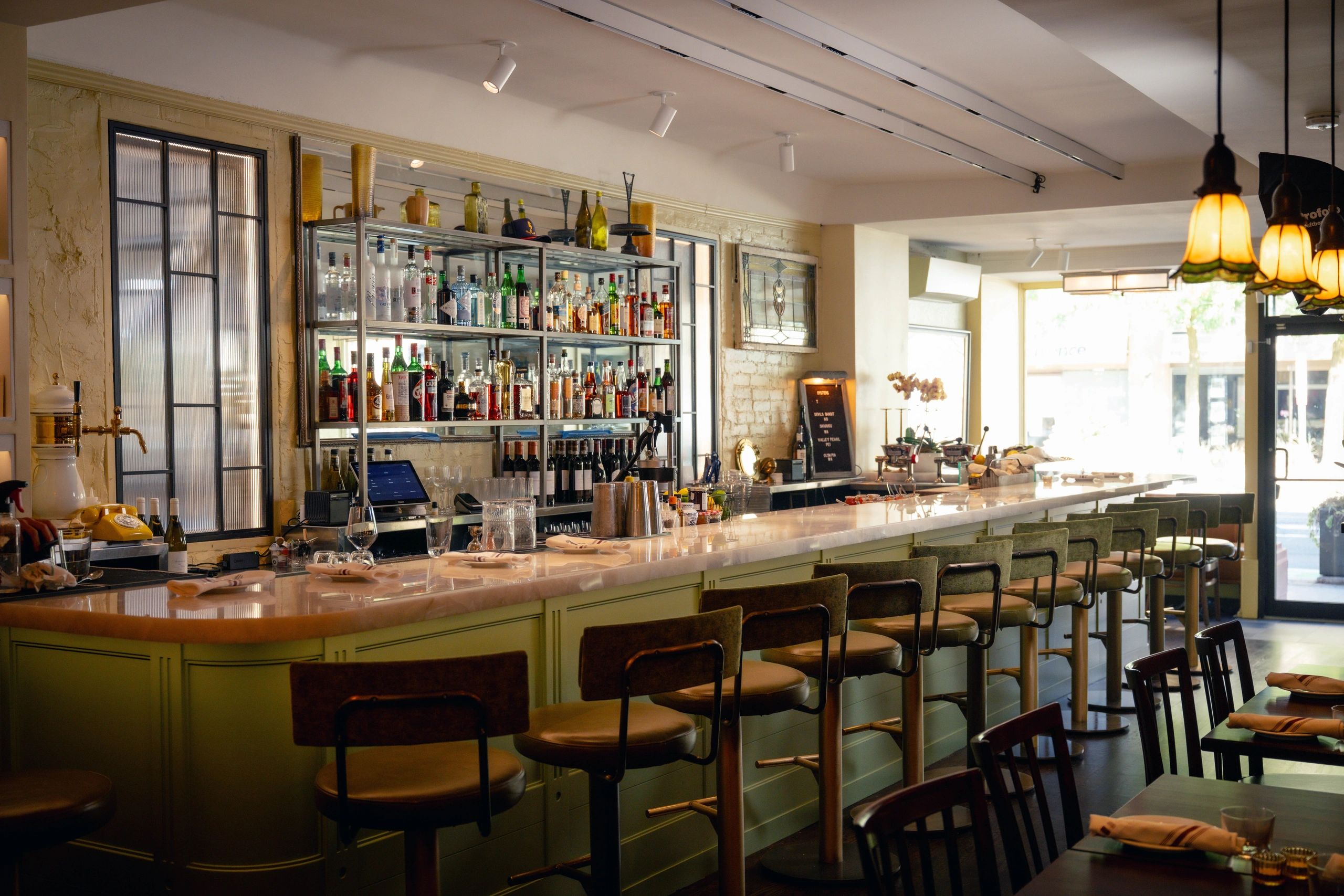
The rundown
You can feel it before you can name it. Somewhere in the last eighteen months, the chefs who spent a decade building tweezer-plated reputations at eleven-course counters got quietly bored of eleven courses. They wanted rooms that hummed. They wanted regulars, not reservations booked eight weeks out for a single seating. So they opened bars with kitchens attached, brasseries with no dress code, and steakhouses where the point isn't restraint, it's abundance. Groceries got expensive, the news stayed loud, and Toronto's best chefs responded by making dinner feel less like an occasion and more like a place you could actually go on a Tuesday.
That's the throughline connecting this year's five most talked about openings. None of them are trying to be the fanciest room in the city. All of them are trying to be the room you come back to. Here's where to find that shift in real time, what to order when you get there, and where to look them up before you go.
Seahorse
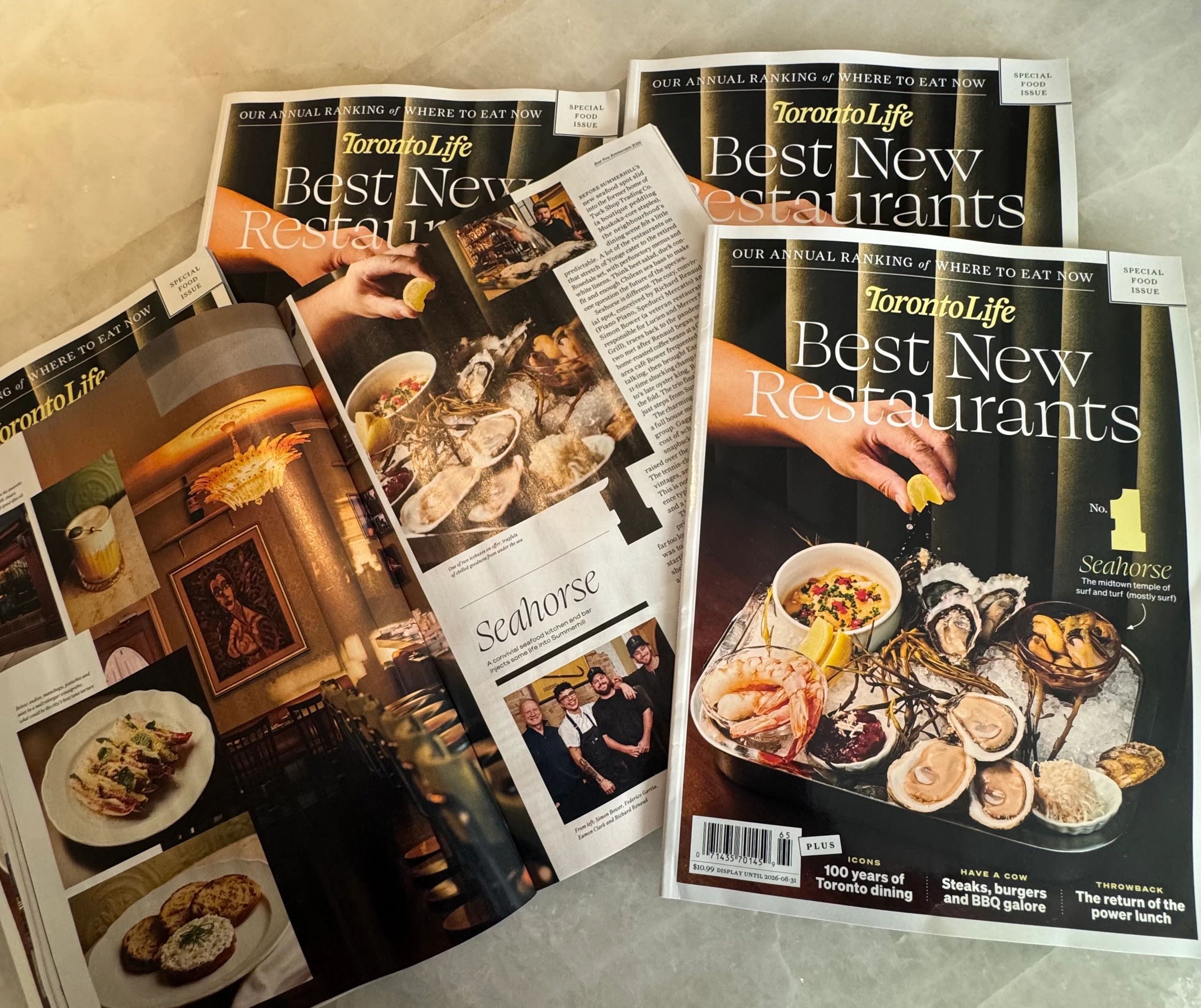
Summerhill has spent years being the neighbourhood where dinner means beet salad, duck confit, and a Chilean sea bass order that makes you quietly reconsider your relationship with the ocean. Seahorse showed up in the old Tuck Shop Trading Co. space and didn't ask permission to change that.
The room comes from an unlikely origin story: veteran restaurateur Simon Bower used to grab coffee at a Casa Loma café where Richard Renaud, a chef with his own home-roasted beans on the side, worked the counter. They got talking. Somewhere in that conversation they landed on Eamon Clark, an eleven-time oyster-shucking champion whose father was Toronto's own late oyster king, and the raw bar was born. You'll want to time your visit around the raw-bar-only hour, when the menu narrows to whatever's freshest and the room gets loud in the good way. The rest of the card stays tight on purpose: a handful of seasonal fish dishes, cocktails that don't try too hard, and nothing that reads like it's performing seafood restaurant instead of just being one.
What we're ordering: Start with the Seahorse Ice Box, the ever-changing raw bar tower of oysters, mussel escabeche, Hokkaido scallop aguachile and beer-poached shrimp, it's the whole kitchen philosophy on one tray. Follow it with whatever's on the rotating pasta of the day. To drink, skip the wine list on your first visit and get the Olive Oil Sour, their amaro-and-olive-oil spin on an amaretto sour sounds strange, drinks like velvet.
N.L. Ginzburg
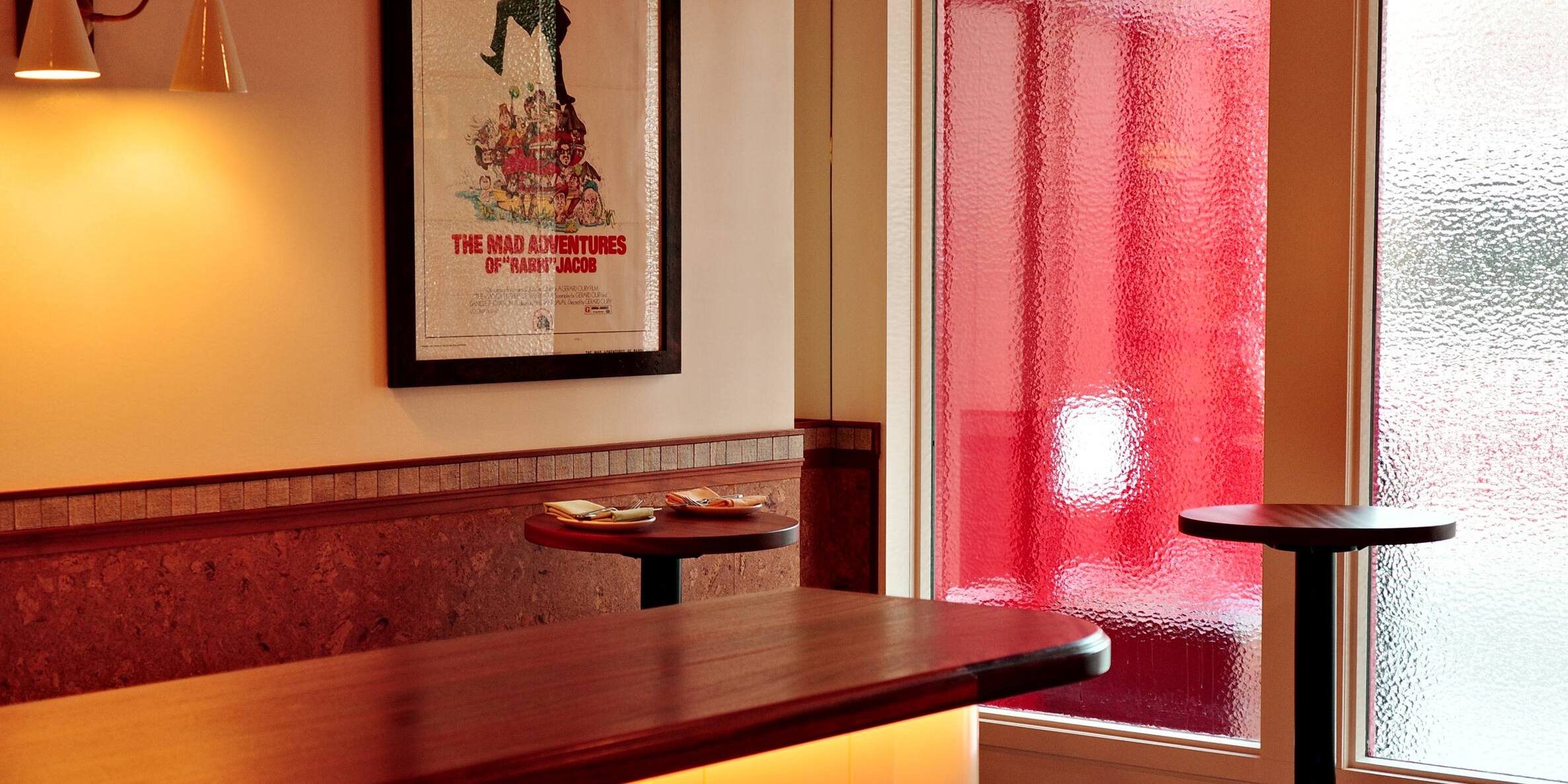
Zach Kolomeir and Carmelina Imola have spent years building some of the city's most trusted rooms, Dreyfus, Bernhardt's, Vilda's — and this is the one that's actually about them. He's Jewish, she's Italian, and instead of picking a lane, N.L. Ginzburg sits in both at once, named for Natalia and Leone Ginzburg, the anti-fascist Italian writers whose politics and identity ran the same intersection.
Italian food has owned Toronto's dining scene for years and Jewish cooking is finally having its overdue moment, so on paper this looks like two trends colliding for convenience. It isn't. Every dish on the table is built to be shared, which means the room does something most tasting menus can't: it makes strangers at the next table over feel like they're at the same party you are. Go with more people than you think you need. The whole format assumes abundance, and ordering for two defeats the point.
What we're ordering: The chicken liver crostini (fegatini ebraici) does the room's whole thesis in one bite Tuscan technique, chopped-liver soul. Get the Bonavista cod tortellini in brodo next, and don't skip dessert: rugelach, or the Italo-Jewish biscotti plate if you can't choose.
Sammarco

Chef Rob Rossi and David Minicucci already know how to build a room that gets photographed — Giulietta and Osteria Giulia proved that years ago. Sammarco is their answer to a different question: what happens when you take that same Italian fluency and point it at a steakhouse instead of a trattoria.
The design won its own award this year, and you'll understand why the second you walk in. It's sleek in a way that could tip into cold, except the kitchen keeps pulling it back toward something warmer and more generous, massive cuts of meat built for the table, not the plate. This is the room for the dinner that's actually a celebration, the one where somebody's expensing it or somebody's turning thirty. It knows exactly what occasion it's for and doesn't apologize for costing what it costs.
What we're ordering: There's only one pasta on the entire menu, the Fettuccine alla Scrofa "Cento Uova," and it's there because it doesn't need company 100-egg fettuccine, 24-month Parmigiano, St. Brigid's butter. Get the Crudo di Tonno to start, and split a Costata (26oz bone-in ribeye) rather than going solo on the porterhouse; it's the more generous per-person math and the better cut.
Brasserie Côte
Teo Paul and Eamon O'Dea spent five years making Ossington's Côte de Boeuf nearly impossible to get into — a butcher-shop-turned-bistro so small that "cult following" undersells it. Brasserie Côte is what happens when they finally give themselves room to breathe, literally: a full-size Parisian brasserie in the old By the Way Café space on Bloor and Brunswick, a spot that had belonged to the neighbourhood for forty years before it was theirs.
Both men have their own Annex history baked into this — O'Dea met his wife's best friend's brother, who turned out to be Paul, back in 1996 — and it shows in how unbothered the room feels. Zinc bar, a vintage chandelier, escargots and steak frites and moules marinières done properly, walk-ins welcome, no pretending this is anything other than the neighbourhood spot it was always going to become. Go on a weeknight if you can. This is a room built for Tuesdays, not just anniversaries.
What we're ordering: Escargots à l'ail gratinés to start, the steak frites with proper béarnaise as your non-negotiable main, and the moules marinières to split down the middle if there are two of you. On weekends, ask about the poulet rôti, it's not always on the printed menu.
Eloise + Bar Cart

Here's the twist nobody saw coming: the family behind the Old Spaghetti Factory just opened one of the most talked-about new dining rooms on the Esplanade, and it has nothing to do with red sauce nostalgia. Brothers Graham and Dan Hnatiw traded checkered tablecloths for burl walnut and silk, and built a room sophisticated enough that you'd never connect the dots unless someone told you.
The real move, though, is behind a door at the back that most first-time diners walk right past. Push through it and you're in Bar Cart, a railcar-inspired speakeasy that's already become the city's default answer to "where do we go after." It's the kind of detail that rewards people who actually explore a room instead of just eating in it — which, in a city currently obsessed with hidden doors and unmarked entrances, is exactly the point.
What we're ordering: At Eloise, the hamachi crudo with shiso emulsion and watermelon radish is the sharpest starter on the menu, and the honeynut squash ravioli with chestnut and comté is the dish worth building the reservation around. Then push through the hidden door: Bar Cart's Espresso Ghost, crystal-clear and made using a $20,000 rotary evaporator, is the one people are actually lining up for.
📍 42 The Esplanade, Toronto · @eloisetoronto · Bar Cart: @bar_cart_to
The pattern
Five rooms, five reputations that didn't need protecting, and five chefs who risked them anyway. Seahorse traded Michelin polish for a raw bar you can actually get a seat at on a Tuesday. N.L. Ginzburg traded a single, tidy identity for two heritages sharing one table. Sammarco took the most self-serious format in dining — the steakhouse — and made it generous instead of stiff. Brasserie Côte gave up intimacy for the kind of room a neighbourhood can actually use every day. And Eloise proved a family legacy built on nostalgia could still surprise you, twice, if you count the door at the back.
None of this is a retreat from ambition. It's what ambition looks like once the goal stops being "get written about" and starts being "get missed on a Friday when someone else has your table." That's the class of 2026 — go find out which one gets you first.
